Wednesday, March 25, 2015

How Do You Say This in English???

あ
✎阿吽の呼吸 aun no kokyu and 以心伝心 ishin denshin :  to make others understand what you are thinking without words
    (e.g.)The elderly couple can make each other understand what they are thinking without words.


か

✎くつひも kutsuhimo: shoelace / (-を結ぶ wo musubu) to tie [do] one's shoelaces /(-をほどく -wo hodoku) to undo one's shoelaces / (-がほどける -ga hodokeru) that your shoelaces come undone [untied]
   (e.g.)Excuse me, your shoelaces are undone.  


✎合理的 go-ri teki :  rational or efficient or reasonable
    (e.g.)The rational system allowed the company to be one of the best corporations in the U.S.


✎コスパ kosupa : cost efficiency / (-がよい -ga yoi) cost efficient or value for money
    (e.g.)He often goes to the restaurant, because it offers cost-efficient meals.
 (*KOSUPA is a Japanese abbreviation of COSUto meaning cost and PA meaning performance.)


✎ごみの日 gomi no hi :  garbage [trash] collection day/ (ごみを出す gomi wo dasu) to take garbage [trash] out
    (e.g.)Today is his turn to take the garbage out.


さ
✎しゃがむ syagamu :  to crouch or to squat
    (e.g.)She crouched so that she could be at the girl's eye level.


✎説得して買ってもらう settokushite kattemorau :  talk sb into buying
    (e.g.)She's glad when she finally talked the customer into buying the perfume.

✎反り腰 sori goshi : to curve one's back backward
    (e.g.)The heavy backpack made her curve her back backward.


た
✎立ちション tachi shon :  to urinate (pee) standing
    (e.g.)She asked him not to urinate standing because it caused his pee to scatter around the lavatory.  


✎棚卸 ana oroshi : inventory / (-をする -wo suru) to take stock/inventory of
    (e.g.)The shop closes for inventory today.


✎テンション tenshon (-が上がる -ga agaru): to get excited or hyper /(-が高い-ga takai): to be hyper /(が下がる-ga sagaru): to feel down, to get disappointed
    (e.g.)The news made him so hyper that he flew high and made a victory pose.

な
✎猫背 nekoze : to slouch ; to stoop ; to bend your head and shoulders forward
    (e.g.)She has stiff shoulders because she often slouches.
(*Nekoze literally means "cat back" since cats often curve their back.)


✎納品 nouhin :  delivery/ (-書) statement of delivery
    (e.g.①)The very popular Japanese whisky was finally delivered to the store.
    (e.g.②)You need to collate an order with the statement of delivery.


ひ
✎皮脂 hishi :  sebum
    (e.g.)The smudge-proof mascara is resistant to sebum and perspiration.


✎まとめる matomeru: to put [combine] sth together [into one] or to unify
    (e.g.)They put lots of data together to create the software. 


や
✎余韻の yoin no :  lingering 
    (e.g.)The perfume leaves you lingering scent.


Friday, March 13, 2015

Japanese Buzzwords

☺Kare-kaji; 彼カジ: literally meaning "Boyfriend Casual," means that girlfriends wear their boyfriends' clothes.  Some women do it for cool and casual appearances.  Also many women said their boyfriends' attire makes them feel happy with a sense of attachment.


☺Kabe-don; 壁ドン: literally meaning "Wall Don (Hitting Sound)," means a romantic situation where a guy leans over a girl and presses his one hand (or both hands) on a wall behind her.  Since normally guys do it in a strong way, you can hear a hitting-a-wall sound, "Don."

▲"neko (cat)-don??? ;)"


Sunday, March 8, 2015

Japanese Cuisine

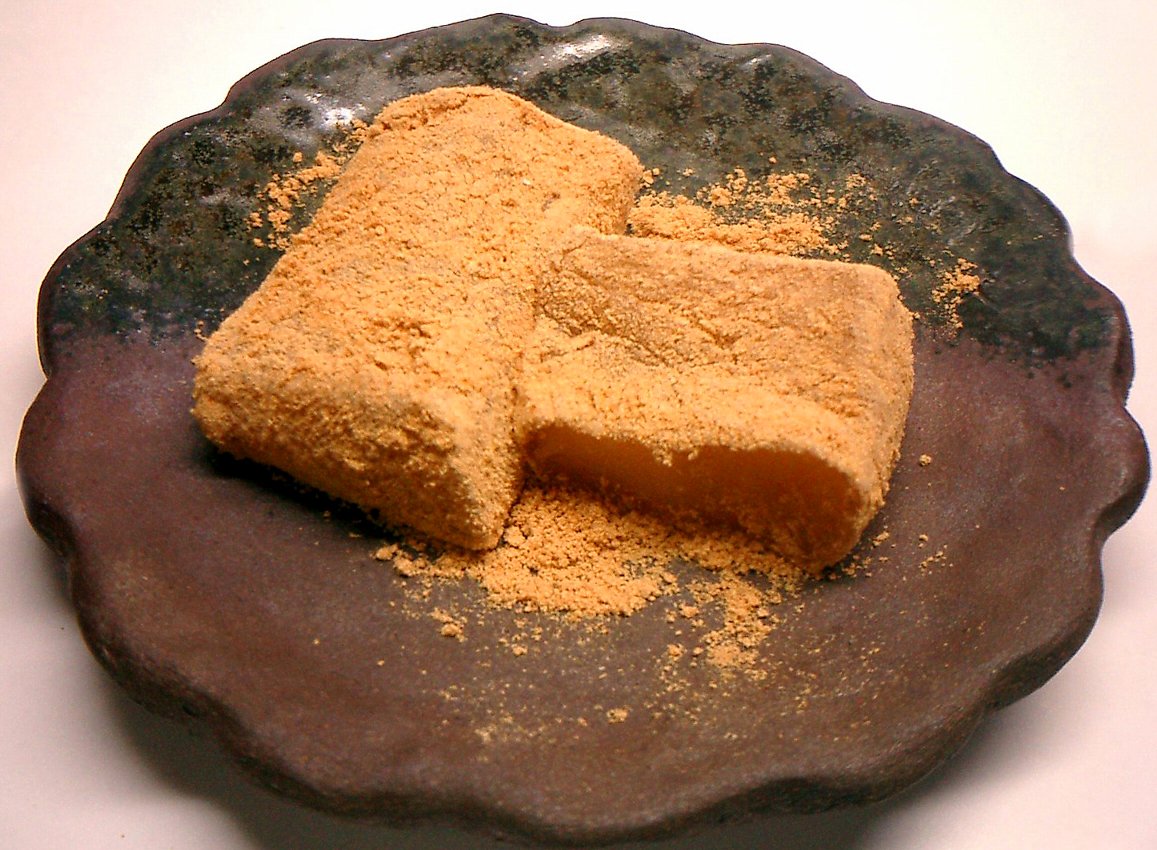
◎Kinako; きな粉: roasted soybean flour commonly used for Japanese confection such as dumplings

◎Kuromitsu; 黒蜜: black sugar syrup made from unrefined black sugar in Okinawa


◎Mitarashi-Dango; みたらし団子: skewerd dmplings coated with sweet soy glaze 
◎Warabi-Mochi; わらびもち: jelly-like confection made from starch of bracken, wild plant called warabi.  It usually covered with Kinako.

Saturday, March 7, 2015

Nouns


☺Fruit Basket Turnover: also Fruit Salad; a children's game, where players make a circle, sitting on chairs.  The number of chairs is one less that that of players.  At the beginning, one player say starts "Someone who...," at the center of the circle; for example, "Someone who wears socks today!"  Then players applying to the statement have to move to other chairs, but not the next chairs are allowed.  The person who cannot get a seat

Sunday, March 1, 2015

Cosmetology


❧Epidermis (n): the top layer of the skin

❧Dermis (n): the deep vascular inner layer of the skin

❧Exfoliate (v): to remove the dead skin cell on epidermis

❧Tighten Pores (pv): to make the appearance of pores inconspicuous, not clearly visible

❧Toner (Toning Lotion): lotion to cleanse the skin and shrink the appearance of pores

❧BB Cream (cn): Beauty Balm Cream promoted as all-in-one facial cream that replaces moisturizer, serum, primer, foundation, and sunblock

❧Serum (n): a cosmetic product, in most cases gel, that penetrate into the deeper layers of the skin

❧Booster (n): a cosmetic product that helps other cosmetics, like lotion or serum, penetrate into the skin well


❧UVA (n): Ultraviolet A Layer; a layer, about 95 % of which reaches the earth surface and penetrates into clouds and glass.  It causes damages deeply to the dermis areas.  It is considered as a major aging factor.


❧UVB (n): Ultraviolet B Layer; a layer, about 5 % of which reaches the earth surface and hardly penetrates into clouds and glass.  It tends to damage the skin's epidermis area.  Especially, you can get it at high altitudes or reflective surfaces such as snow, bouncing back up to your skin twice.

❧SPF (n): Sun Protect Factor; the amount of protection against UVB

❧PA⁺⁺⁺(n): Protection Grade of UVA; the amount of protection against UVA


Japanese Whisky

○Whisk(e)y: a type of distilled spirits made from fermented grain mash; the mixture of powdered malt with hot water

☞Whisky or Whiskey???
    Scottish one uses the spelling "Whisky," while American and Irish uses "Whiskey."  Since Japanese one follows the Scottish way, it is spelled as "Whisky."

☞Ingredients: various grains, such as barley, corn, rye, wheat,
etc...

☞normally it's aged in wooden casks

○Malt; 麦芽: grains that has been steeped, germinated, and dried; used for brewing or distilling


○The Three Kinds of the Content:
   1)Single Malt: whisk(e)y made mainly from malted barley and produced in a single distillery
      (e.g.)Yamazaki; 山崎, Hakusyu; 白州, Yoichi; 余市

   2)Blended Malt Whisk(e)y or Pure Malt Whisk(e)y: whisk(e)y made mainly from malted barley and mixed with other distilleries
      (e.g.)Taketsuru; 竹鶴

   3)Blended Whisk(e)y or Grain Whisk(e)y: whisk(e)y made from any kinds of grains and mixed with other distilleries
      (e.g.)Hibiki; 響


○The Types of Whisk(e)y:
  Scottish is the most well-known one; others are American (such as Bourbon), Canadian, Irish, Japanese, etc.


Saturday, February 28, 2015

Nihonshu; 日本酒

○Nihonshu; 日本酒: fermented rice wine


○Junmai-Daiginjo; 純米大吟醸: a nihonsyu made from very refined rice, less than 70 % of unpolished rice, or rice malt called koji; 麹, which is fermented very slowly at a low temperature;
☞the process is called Ginjo-Zukuri; 吟醸造り


○Shudo; 酒度: the amount of sugar in nihonsyu;
☞the bigger the number is, the drier the nihonsyu is, the smaller the sweeter

○Seimaibuai; 精米歩合: the ratio of how much rice is milled
☞less than 70 % of the ration is called Junmaishu; 純米酒


○How to be served:
・Kan; 燗: it's best when served hot
・Jo-on; 常温: it's best when served at the room temperature
・Hie; 冷: it's best when served chilled